
A Brand-New Home. What Could Go Wrong?
It’s a reasonable question.
You’ve just completed construction on a beautiful new home. Your builder has delivered the finished product, your major systems are brand-new, and the work is backed by warranties. You’ve invested in security cameras, water monitoring devices, and other technology designed to protect your property while you’re away.
So why would you need a professional home management company?
It’s a question we hear frequently, particularly from owners of newly constructed luxury homes. And recently, an experience with one of our clients in Bigfork, Montana, demonstrated exactly why the answer matters.
Sometimes, the greatest value of concierge home management isn’t what we do when something goes wrong. It’s what we prevent from happening in the first place.

A Homeowner Who Had Every Reason to Feel Protected
The client had recently completed construction on a new residence in downtown Bigfork. Like many homeowners in the Flathead Valley, he planned to occupy the property seasonally, leaving it unoccupied for much of the winter.
During our initial discussions, he expressed reservations about the value of our concierge home management services.
He already had security cameras and water alarms. His builder remained available to coordinate warranty work with the original subcontractors. The home was new, its systems were new, and he was comfortable monitoring the property remotely and calling for help if something went wrong.
He also questioned the frequency of our proposed home visits and the associated expense.
As he explained during our initial correspondence:
“We were expecting a visit to the houses once or twice a month (not bi weekly) given our burglar and water alarm systems, so the pricing was more than double what we were anticipating.”
These were fair concerns.
The homeowner was evaluating the service based on the number of visits and the cost associated with them. From his perspective, he had already invested in several layers of protection and wasn’t convinced that additional professional oversight was necessary.
It’s a conversation we have with prospective clients regularly.
When everything appears to be functioning properly, it can be difficult to assign value to the problems that haven’t happened.
After several conversations, we agreed on a seasonal arrangement covering only his newly constructed residence. His adjacent property would remain outside our scope, and the original builder would continue handling any applicable warranty work.
It was a practical compromise that respected the homeowner’s priorities while providing the property with regular professional oversight.
What happened next demonstrated the value of that decision.
One Routine Visit. One Potentially Expensive Discovery.
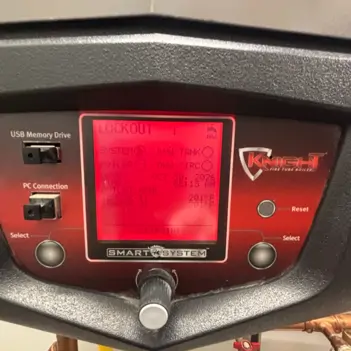
During one of our first scheduled visits to the new residence, our home management team discovered that the home’s boiler had shut down.
The heating system was not operating as intended, and the interior temperature of the home had fallen approximately 30 degrees below where it should have been.
This wasn’t an aging home with decades-old mechanical equipment. It was a newly constructed residence with new systems, installed by professional trades and supported by builder warranties.
And yet, a critical system had stopped functioning.
Our team identified the issue during its routine inspection and promptly notified the builder, who arranged for the appropriate contractor to respond and reset the system.
Fortunately, the problem was discovered before the extreme winter temperatures arrived.
Had the failure continued unnoticed into a prolonged period of freezing weather, the consequences could have been significantly more serious.
Frozen plumbing, burst pipes, water damage, damaged cabinetry, ruined flooring, and extensive repairs to newly completed interiors were all potential risks.
A single mechanical failure could have turned a brand-new home into an expensive restoration project.
Instead, the issue was discovered and addressed before that happened.
“One ordinary home inspection had potentially prevented an extraordinary problem.”
A Warranty Doesn't Prevent a Problem. It Provides a Path to Fixing One.
One of the most important distinctions in home management is the difference between having a warranty and having someone actively watching over your property.
During our contract discussions, the homeowner emphasized the protections already in place through his builder.
“The new house has warranties with the existing contractors that built the house. Our builder has some go forward responsibilities in managing those contractors.”
He was absolutely right.
A builder warranty is valuable. It provides a mechanism for addressing qualifying defects or failures, and a reputable builder should stand behind its work.
We encourage homeowners to maintain those relationships and utilize their warranties whenever appropriate.
But a warranty doesn’t walk through your home.
It doesn’t notice an unusual interior temperature, investigate a mechanical system that has stopped running, or recognize that something isn’t operating as it should.
And perhaps most importantly, a warranty doesn’t necessarily protect a homeowner from every consequence of a problem that goes undetected.
In this case, the builder did exactly what we would hope a responsible builder would do. Once notified, they arranged for the appropriate contractor to address the issue.
Our role wasn’t to replace the builder or interfere with the warranty process.
“Our role was to discover the problem and help put the right people in motion.”
These are complementary responsibilities, not competing services.
For newly constructed homes, the relationship between the builder, homeowner, and concierge home management provider can be particularly valuable. Each has a different role in protecting the home and ensuring that issues are addressed appropriately.
Technology Is Valuable. Physical Oversight Is Different.
Today’s homes are equipped with increasingly sophisticated monitoring technology.
Security cameras, water sensors, smart thermostats, and remote monitoring applications provide homeowners with more information and control than ever before.
We encourage the use of these technologies. They’re valuable components of a comprehensive home protection strategy.
Our client’s original position reflected a common approach to managing a seasonal residence:
“We are comfortable locking down the houses and monitoring them with video cameras and water alarms - and calling in help if and when things go wrong.”
That final phrase captures an important distinction: if and when things go wrong.
There’s a meaningful difference between identifying a developing problem and responding after damage has already occurred.
A water sensor may notify you when moisture reaches a particular location. A camera may show you what’s happening within its field of view. A thermostat may report that a home’s temperature has fallen, provided the system is equipped and configured to deliver those alerts.
But none of these technologies guarantees that every developing issue will be identified.
And even when a system sends an alert, someone still needs to act.
For seasonal homeowners who may be hundreds or thousands of miles away, receiving a notification is only the beginning.
Someone may still need to investigate the problem, assess the situation, provide access to the appropriate professionals, coordinate repairs, and confirm that the issue has been resolved.
A monitoring system can provide information.
“A concierge home management team provides the physical presence, judgment, and coordination needed to act on that information. ”
The two work best together
Why New Construction Needs Attention, Too
There’s a common assumption that new homes require less oversight because everything is new.
While newer systems and materials may reduce certain maintenance concerns, a recently completed home is also entering its first period of real-world operation.
Heating and cooling equipment, plumbing systems, automation, controls, and other mechanical components are being tested under everyday conditions, sometimes for the first time through a full seasonal cycle.
A system that operated properly during commissioning can still experience a shutdown, malfunction, or unexpected performance issue.
Even the best-built homes are not immune to equipment failures.
This is particularly relevant in Montana, where winter temperatures can place significant demands on a home’s heating and plumbing systems.
A home completed during the summer or fall may not have experienced its first prolonged stretch of subzero temperatures. Heating systems, mechanical rooms, exterior plumbing, and other components may be facing conditions that weren’t present during final construction and turnover.
And unlike an occupied residence, where a homeowner might notice a sudden temperature change or unusual equipment behavior, a vacant seasonal home can experience these problems without anyone immediately realizing something is wrong.
This is one reason we believe the first year following construction is an especially important period for professional home oversight.
It’s an opportunity to become familiar with how the property operates, identify developing issues, and work alongside the original builder and subcontractors when corrective work is needed.
“A newly constructed house isn't immune to problems simply because it's new.”
And when those problems arise, early identification can make an enormous difference.
The Real Value Is Often What Never Happens
When homeowners evaluate concierge home management, they understandably focus on the visible services.
How frequently will someone visit? What does the inspection include? How much time is spent at the property? What is the monthly cost?
Those are legitimate questions.
But they don’t capture the entire value of the service.
Consider the potential consequences of a heating failure during a Montana winter.
If temperatures inside an unoccupied residence fall low enough for plumbing to freeze, the resulting damage can be substantial.
A burst pipe may require emergency plumbing repairs, water mitigation, drywall replacement, flooring replacement, cabinetry repairs, and potentially weeks or months of disruption.
For a newly constructed luxury residence, the financial exposure can be significant.
And while insurance or builder warranties may cover certain losses depending on the circumstances, neither eliminates the inconvenience, uncertainty, and time required to restore a damaged property.
Compare that exposure with the cost of routine professional inspections designed to identify problems early enough for the appropriate people to intervene.
Not every inspection uncovers a significant issue. In fact, most visits should be uneventful.
That’s the point.
“The objective isn't to find something wrong every week. It's to help ensure that small problems don't have the opportunity to become large ones.”
A successful visit may involve confirming that the heating system is operating, checking for evidence of leaks, observing mechanical equipment, inspecting vulnerable areas, and documenting the property’s general condition.
Nothing dramatic. Nothing particularly exciting.
Just the quiet, consistent oversight that helps protect a substantial investment.
The real value of home management is often measured in the emergencies that never happen, the damage that never occurs, and the headaches a homeowner never has to experience.
Protecting the Home After the Builder Hands Over the Keys
Ultimately, our Bigfork client chose to engage AllHaus for a limited seasonal period.
As he explained during our discussions:
“We would like to utilize your services for our newer home ... for the 7 months from Nov - May.”
It was a measured decision.
He wasn’t looking for someone to replace his builder, take over his warranties, or manage every aspect of his properties.
He wanted a defined level of service that fit his needs and provided additional oversight while he was away.
And within the first few visits, that decision proved worthwhile.
A critical heating system failure was discovered, the builder was notified, and the problem was addressed before extreme winter temperatures arrived.
There was no dramatic emergency response. No major restoration effort. No costly repairs to newly completed finishes.
Just a problem identified early and addressed by the appropriate professionals.
For us, that’s exactly what successful home management should look like.
At AllHaus, we believe the completion of construction marks the beginning of a new responsibility: protecting the investment that has just been made.
Builders build. Warranty teams address covered issues. Security systems monitor specific conditions.
Our concierge home management team provides another layer of protection through regular physical inspections, proactive communication, vendor coordination, and ongoing attention to the property.
The homeowner didn’t need us to replace his builder, his warranties, or his technology.
He needed someone to notice what those protections hadn’t.
And sometimes, that’s all it takes to make the difference between a routine service call and a costly emergency.
A beautiful home is a significant investment. Protecting it shouldn’t begin only after something goes wrong.
About AllHaus Concierge Home Management
AllHaus provides professional concierge home management services for seasonal and full-time homeowners throughout Montana’s Flathead Valley, including Bigfork, Whitefish, Kalispell, Lakeside, and surrounding communities.
From regularly scheduled home inspections and preventative maintenance oversight to vendor coordination, emergency response, and personalized concierge services, our team helps homeowners enjoy their properties without the burden of managing every detail.
One call for the home. More time for everything else.